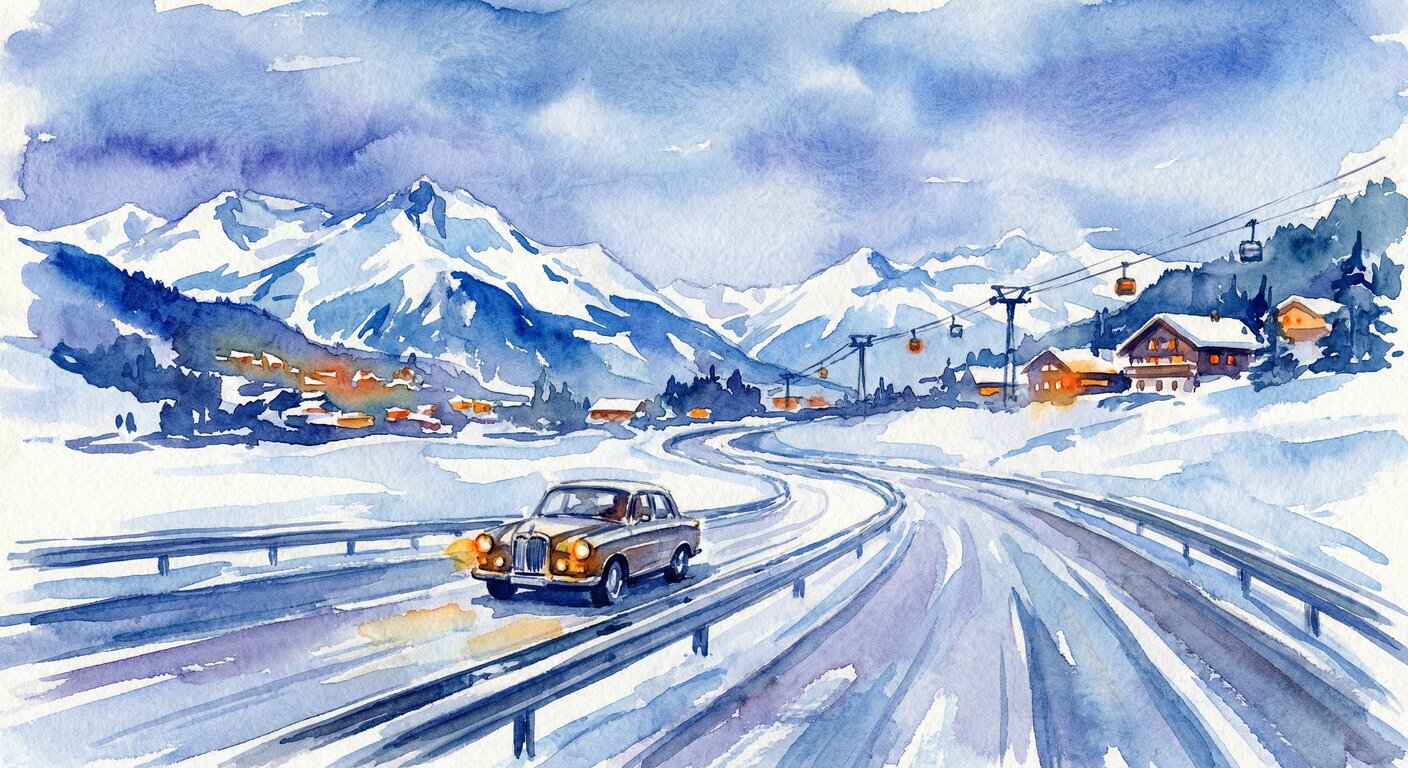
Driving to Ski Resorts from Germany — Complete Guide
Driving to Alpine ski resorts from Germany offers unparalleled freedom, convenience, and cost savings for your winter sports adventure. This comprehensive guide covers everything from optimal routes and timing to essential equipment and insider tips, ensuring your road trip to the slopes is as smooth as fresh powder.
Why Drive to the Alps from Germany?
Financial Benefits
Cost Comparison Analysis: - Family of Four Flying: €800-1,200 plus airport transfers, baggage fees, and equipment rental - Family of Four Driving: €200-400 fuel plus accommodation stops, bringing your own equipment
The savings become even more significant when you factor in equipment transport—airlines charge €50-100 per ski bag, while your car carries unlimited equipment for free.
Flexibility and Convenience
Route Freedom: Stop at charming Alpine villages, take scenic detours, or extend your trip spontaneously without airline schedule constraints.
Equipment Transport: Carry all your gear, including bulky items like boots, helmets, and après-ski clothing that would cost extra or exceed airline weight limits.
Multi-Resort Access: Easily visit multiple ski areas during one trip, perfect for exploring different terrain and snow conditions.
Strategic Route Planning
Major German Departure Cities
From Munich (München)
Best Alpine Access Point for German Road Trippers
Munich’s proximity to the Alps makes it the ideal starting point for ski adventures. SlopeStay’s drive time calculator shows precise travel times to over 200 Alpine resorts from Munich’s various districts.
Prime Destinations (Drive Times from Munich Center): - Garmisch-Partenkirchen: 1.5 hours via A95 - Innsbruck, Austria: 2 hours via A95/A12 - St. Anton am Arlberg: 2.5 hours via A7/A12/S16 - Kitzbühel: 2 hours via A93/A12 - Salzburg Region: 1.5-2 hours via A8
Munich Routing Tips: - Avoid Friday afternoon departures—Munich-Alps traffic can add 60+ minutes - Use A95 instead of smaller roads for better winter conditions - Consider staying overnight in Garmisch if driving to Western Austria during peak periods
From Frankfurt am Main
Central German Gateway to Western Alps
Frankfurt provides excellent access to French and Western Swiss resorts, with well-maintained Autobahn connections throughout the journey.
Optimal Destinations (Drive Times): - Strasbourg Region (France): 2.5 hours via A5 - Chamonix Valley: 5.5 hours via A5/A40/A406 - Verbier, Switzerland: 5 hours via A5/A6 - Zermatt Access (Täsch): 6 hours via A5/A9
Use SlopeStay’s route planning feature to identify overnight stops that break these longer journeys into manageable segments.
From Berlin
Northern Germany’s Alpine Gateway
Berlin’s distance from the Alps requires strategic planning, but overnight stops can turn the journey into part of your vacation experience.
Recommended Destinations with Overnight Stops: - Austrian Tyrol: 8-9 hours total (overnight in Munich region) - Swiss Alps: 9-10 hours total (overnight in Stuttgart/Karlsruhe area) - Italian Dolomites: 8-9 hours total (overnight in Innsbruck region)
Berlin Strategy: Consider flying for shorter trips (under 4 days) but driving becomes cost-effective for week-long or multi-week Alpine adventures.
From Hamburg
Northern Coast to Alpine Peaks
Hamburg drivers face similar distances to Berlin travelers, but excellent Autobahn connections make the journey straightforward.
Strategic Approach: - Plan two-day journeys with attractive overnight stops - Consider Nuremberg or Munich as halfway points - Use the journey to explore German Alpine regions like Berchtesgaden
Seasonal Timing Strategies
Peak Season Considerations (December-February)
Traffic Patterns: - Friday Afternoons: Avoid departing 2-7 PM—German city exodus creates massive delays - Saturday Mornings: European-wide ski traffic peaks; expect 30-50% longer journey times - Sunday Evenings: Return traffic from Alps creates bottlenecks at German borders
Optimal Departure Times: - Thursday evenings after 8 PM for weekend trips - Very early Saturday mornings (4-6 AM) to beat the rush - Mid-week departures for extended stays offer best conditions
Weather-Related Planning
Alpine Weather Monitoring: Monitor weather forecasts for mountain passes using reliable sources: - ADAC Traffic Information: Real-time Alpine pass conditions - Austrian ASFINAG: Comprehensive Austrian highway conditions - Swiss TCS: Swiss Alpine pass status and equipment requirements
SlopeStay’s accommodation platform includes current weather conditions for each resort, helping you make informed departure decisions.
Essential Equipment and Preparation
Winter Driving Equipment
Legally Required: - Winter tires: Mandatory in Austria (Nov 1-Apr 15) and recommended throughout Alpine regions - Snow chains: Required for certain mountain passes; fines up to €5,000 for unprepared vehicles - Headlight deflectors: Required when driving in right-hand traffic countries
Highly Recommended: - Ice scraper and brush: European winters require heavy-duty equipment - Emergency kit: First aid, reflective triangles, flashlight - Extra washer fluid: Alpine salt and grime require frequent windshield cleaning
Documentation Requirements
Essential Documents: - Valid driver’s license and passport: EU licenses valid throughout Alpine regions - Vehicle registration: Keep original documents accessible - Insurance confirmation: Ensure coverage extends to Alpine countries - Green Card: May be required for certain countries post-Brexit
Toll and Vignette Preparations: - Austrian Vignette: €96.40 for annual, available at border crossings - Swiss Vignette: CHF 40 annual requirement - Italian Tolls: Pay-per-use system on major Alpine routes
Route-Specific Insights
Germany to Austrian Alps
Primary Routes:
A8 Munich-Salzburg: The most popular German-Austrian ski corridor - Traffic: Heavy Friday/Saturday ski traffic - Conditions: Generally excellent winter maintenance - Stops: Rosenheim, Traunstein for breaks and fuel
A93 Rosenheim-Kufstein-Innsbruck: Scenic alternative with excellent infrastructure - Advantages: Often less congested than A8 - Access: Direct routes to Kitzbühel, St. Anton, Sölden - Scenery: Beautiful Alpine views once crossing Austrian border
Germany to Swiss Alps
Strategic Considerations:
Basel Route (A5): Best for Western Swiss resorts - Destinations: Verbier, Zermatt, Saas-Fee region - Advantages: Avoid Gotthard Pass winter complications - Distance: Longer but more reliable than central routes
Gotthard Route (A2): Direct access to Central Swiss Alps - Warning: Tunnel closures and weather delays common in winter - Alternative: Lötschberg car shuttle as backup option
Germany to French Alps
Optimal Routing:
A5 Karlsruhe-Strasbourg-Besançon: Primary French Alps access - Destinations: Chamonix, Val d’Isère, Les Trois Vallées - Benefits: Excellent highway infrastructure throughout journey - Fuel Strategy: Fill up in Germany—fuel costs increase significantly in France
Alternative Routes: A6 through Lyon for Southern French Alps (La Plagne, Val Thorens region)
Accommodation Strategy for Road Trippers
Ski Resort Parking Considerations
When using SlopeStay to book accommodation, prioritize properties offering:
Free Parking: Alpine resort parking can cost €15-25 daily Covered Parking: Protects your vehicle from snow and ice Equipment Storage: Secure areas for skis, boots, and winter gear Electric Vehicle Charging: Increasingly important for modern travelers
Multi-Stop Trip Planning
Regional Ski Passes: Plan accommodation around multi-resort passes - Arlberg Ski Pass: Access St. Anton, Lech, Zürs, and more - Kitzbühel Alps Pass: Multiple resorts throughout region - Dolomiti Superski: 12 resort areas across Italian Dolomites
SlopeStay’s regional accommodation search helps identify properties that provide access to multiple ski areas within single regions.
Cost Management Strategies
Fuel and Toll Budgeting
Sample Journey Costs (Munich to St. Anton am Arlberg): - Fuel: €35-45 (depending on vehicle efficiency) - Austrian Vignette: €17.40 (10-day option) - Parking: €0-20 daily (depending on accommodation choice)
Money-Saving Tips: - Fuel in Germany: Always fill up before crossing borders—German fuel prices typically lower - Group Travel: Cost per person decreases dramatically with full vehicle occupancy - Multi-Week Trips: Annual vignettes become cost-effective for extended stays
Hidden Cost Awareness
Border Crossing Fees: Most Alpine countries require highway vignettes or tolls Equipment Rental Savings: Bringing your own equipment saves €30-50 per person per day Flexibility Value: Ability to change locations based on snow conditions or weather
Technology and Planning Tools
SlopeStay Integration
Use SlopeStay’s drive time calculator to: - Compare journey times from your specific German location to various resorts - Plan multi-resort itineraries based on realistic driving distances - Identify accommodation with optimal parking and equipment storage - Monitor real-time conditions affecting your planned route
Navigation and Traffic Apps
Recommended Apps: - Google Maps/Waze: Real-time traffic and route optimization - ADAC Traffic: German-specific traffic and construction updates - Here WeGo: Excellent offline maps for Alpine regions with limited cell coverage
Safety and Emergency Preparedness
Alpine Emergency Contacts
Essential Numbers: - German ADAC: 089 20 20 4000 (roadside assistance) - Austrian ÖAMTC: 120 (emergency roadside help) - Swiss TCS: 140 (breakdown service) - European Emergency: 112 (works throughout EU)
Weather-Related Contingencies
Pass Closures: Monitor Alpine pass status and have alternative routes planned Accommodation Flexibility: Book refundable rates during uncertain weather periods Equipment Preparedness: Carry emergency supplies for unexpected delays
Regional Specialties and Stops
Scenic Route Enhancements
Transform your ski trip transportation into part of the vacation experience:
Bavarian Route Highlights: - Neuschwanstein Castle: 30-minute detour from Munich-Austria route - Oberammergau: Traditional woodcarving village - Mittenwald: Picture-perfect Alpine town
Austrian Scenic Stops: - Hallstatt: UNESCO World Heritage lakeside village - Salzburg: Mozart’s birthplace and baroque architecture - Innsbruck: Imperial city surrounded by dramatic peaks
Conclusion
Driving to Alpine ski resorts from Germany opens up a world of flexibility, cost savings, and adventure that flying simply cannot match. With proper planning, the right equipment, and strategic use of tools like SlopeStay’s drive time calculator and accommodation search, your road trip becomes an integral part of your skiing experience.
The freedom to explore multiple resorts, bring all your equipment, stop at charming Alpine villages, and travel on your own schedule makes driving an increasingly attractive option for German ski enthusiasts. Whether you’re departing from Munich for a quick weekend in Austria or embarking from Berlin for a multi-week Alpine adventure, the open road offers possibilities that extend far beyond your destination resort.
Remember to plan for seasonal traffic patterns, prepare proper winter equipment, and book accommodation with parking considerations in mind. Most importantly, embrace the journey as part of your Alpine adventure—some of the most memorable moments happen between destinations, not just on the slopes.